|
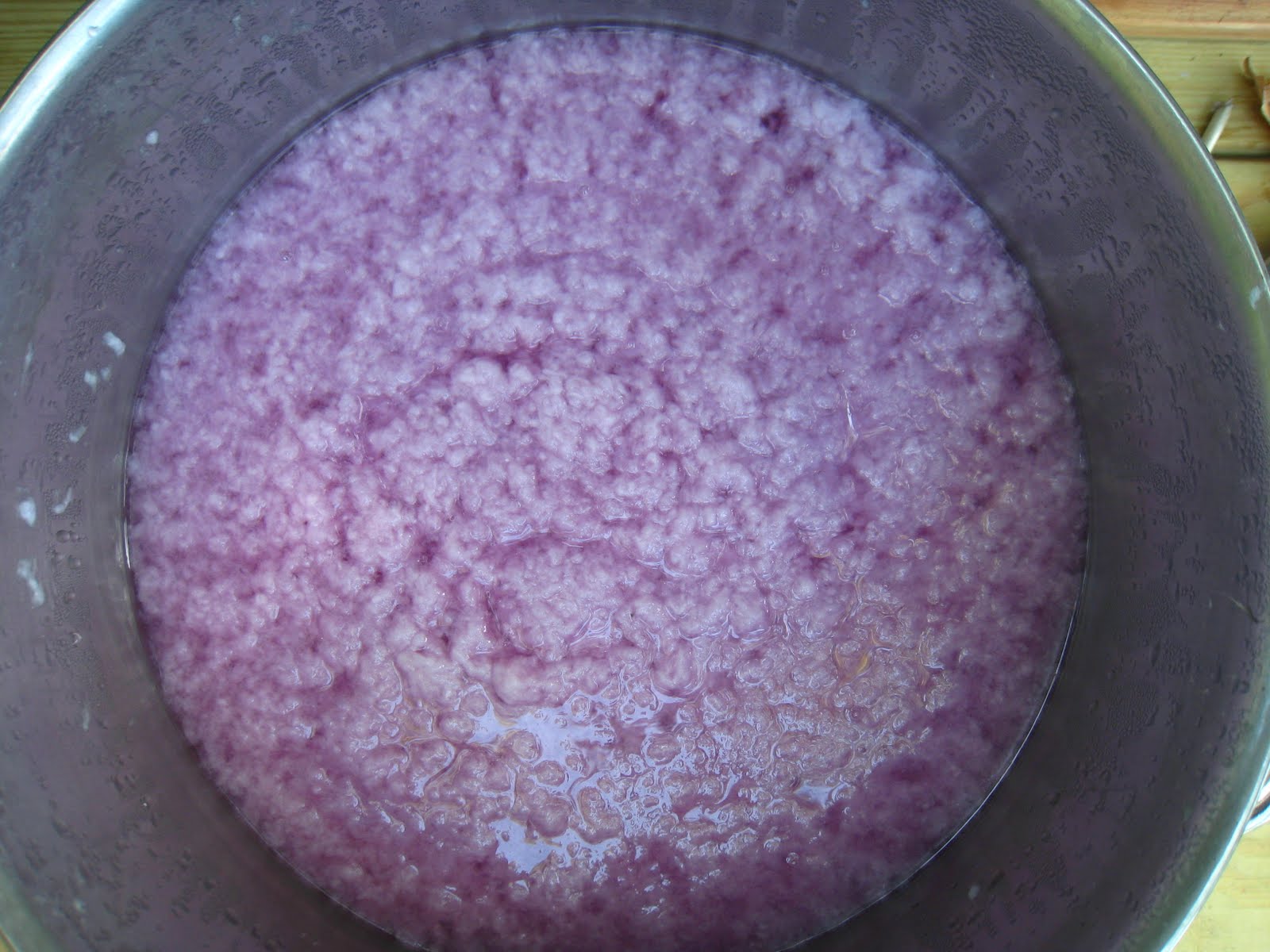
| L to R: dye before adding mordanted fiber, after; half of each |
|
After seeing some photos of different types of fabrics dyed with red cabbage leaves, I was smitten! The varying shades of purples, lavenders and violets had me hooked! Unfortunately for me, I was working with cotton pulp, not silk or wool fabric.*

I planted three red cabbages in the spring having read that they are good dye plants. I harvested them from the garden on Monday, removed the outer greenish blue leaves, then cut up both the head and outer leaves. I cooked them in separate batches hoping to get two different colors from the same plants. The outer leaves did not yield any color, even after simmering for an hour and a half. The purple heads did release their color in just 20 minutes.
I pre-mordanted the cotton pulp the same as I have been, as recommended for cotton cloth in
Wild Color by Jenny Dean. The author suggests using alum and washing soda (as a neutralizer to the acidic alum) to mordant the cotton before dyeing.
I added the cotton to the strained dye bath, brought to a simmer and simmered for 20 minutes. The color of the dye bath seemed to change before my eyes! it went from lavender to a greyish blue to bright cotton candy blue!


I divided the pulp in half and added a small amount of white vinegar to one batch. This turned a magenta color.
On Tuesday I performed the very smelly job of rinsing these pulps. I was sad to see the color being washed out as I did so. I wonder if I had let the pulp sit in the dyebath overnight, rather than draining it right away, would the color have been darker?
 |
| blue pulp in vat |
|
Today I made paper from the two batches of pulp. It is difficult to tell the difference between the two because the color is so light!

The finished sheets. Top - pure white cotton, center - red cabbage dye and acid modifier, bottom - red cabbage dyed cotton paper
*Rereading the recipe for red cabbage dye in
The Handbook of Natural Plant Dyes by Sasha Duerr, I realized that those luscious fabrics were first treated with a tannin and then they were mordanted with alum! I will attempt this recipe again next year. I will pretreat cotton fabric, dye it, wash and dry it then cut it up and beat it into a pulp.


 I planted three red cabbages in the spring having read that they are good dye plants. I harvested them from the garden on Monday, removed the outer greenish blue leaves, then cut up both the head and outer leaves. I cooked them in separate batches hoping to get two different colors from the same plants. The outer leaves did not yield any color, even after simmering for an hour and a half. The purple heads did release their color in just 20 minutes.